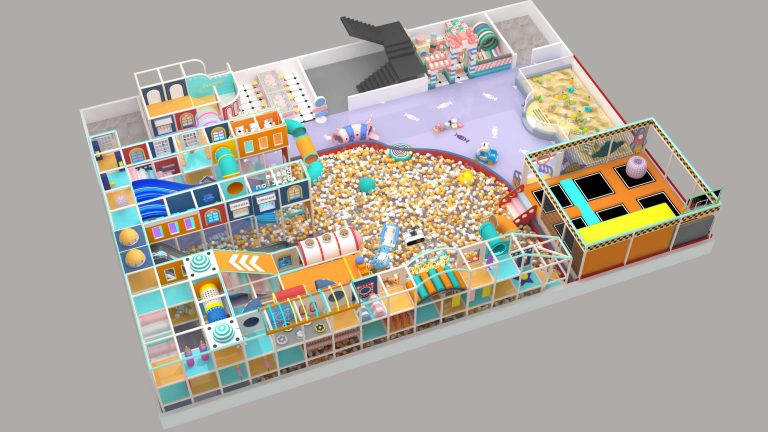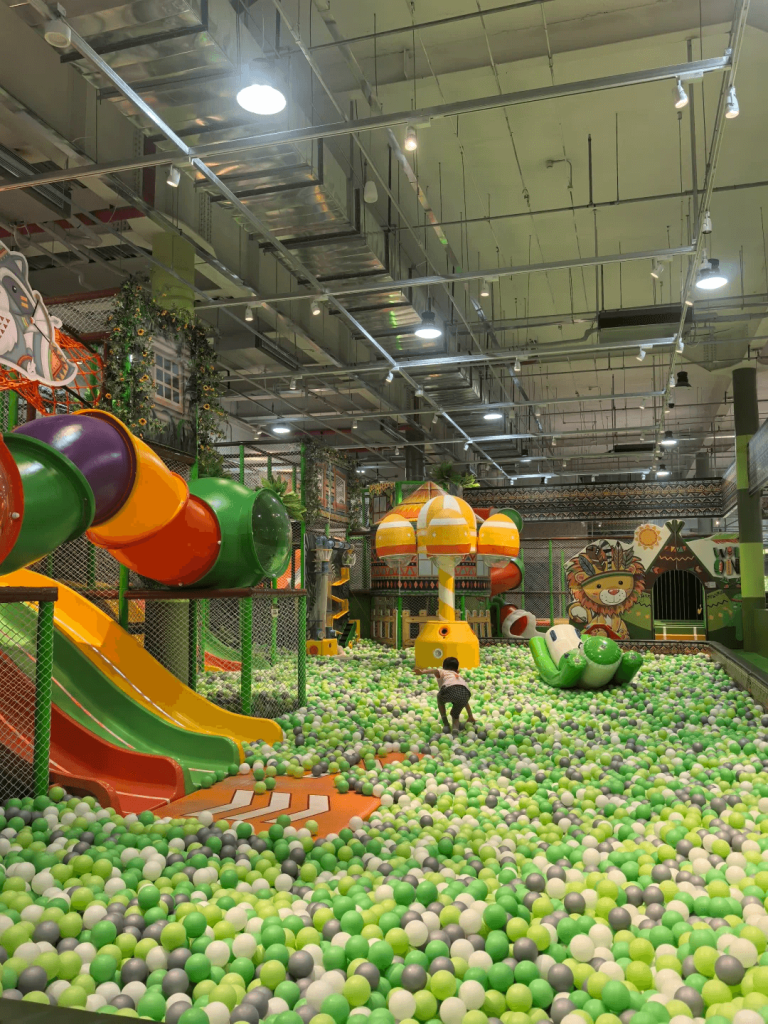
An indoor adventure playground is more than a traditional soft play area. It gives children different ways to move and explore, from climbing and balancing to jumping, crawling and sliding.
For a commercial indoor playground, this variety can make a big difference. Instead of having one large play structure doing all the work, the space can be divided into different activities that appeal to different ages and interests.
A typical project may combine soft play, climbing walls, ninja courses, rope courses, trampolines, slides, ball pits and interactive play equipment. The final mix depends on the size of the venue, ceiling height, target age group and business model.

Designing an Indoor Adventure Playground
There is no single layout that works for every venue.
An indoor adventure playground design should start with the actual building. Floor area, ceiling height, columns, entrances, emergency exits, lighting and customer flow all need to be considered before the equipment is finalized.
For example, a shopping mall unit may need a different layout from a standalone family entertainment center. A smaller kids’ play center may focus on soft play and slides, while a larger indoor adventure park can have enough room for a ninja course, climbing area, trampoline zone and multi-level adventure structure.
This is where 3D design becomes useful. Before production starts, investors can see how the equipment will fit into the venue and make changes while the project is still on the drawing board.
At Coolplay, we work around the customer’s space rather than simply selecting a standard playground from a catalog. The design can be adjusted according to the available area, budget, theme and the type of customers the business wants to attract.
A jungle adventure theme may work well for younger children. A sports or modern adventure concept can be more suitable for older kids and teenagers. For a family entertainment center, combining several play experiences can make the venue more appealing to different age groups.

Choosing Indoor Adventure Playground Equipment
The equipment is what gives an adventure playground its character.
For an indoor adventure playground for kids, soft play is often used as the foundation because it can accommodate a wide range of ages. Slides, tunnels, climbing elements, bridges and ball pits can then be connected into a larger play structure.
For older and more active visitors, indoor adventure playground equipment can include:
- Ninja Warrior-style obstacles
- Indoor climbing walls
- Rope and net courses
- Trampoline areas
- Parkour elements
- Multi-level adventure towers
- Spiral and tube slides
- Interactive games
- Challenge courses
The idea is not to add as many attractions as possible. Good equipment selection should create a natural flow through the playground and give visitors different levels of challenge.
Safety and durability are also important for commercial projects. Indoor playground equipment for commercial use needs to handle frequent daily use, so the materials, padding, connections, netting and finishing details all deserve attention.
For investors buying directly from an indoor playground equipment manufacturer, it is also worth looking beyond the equipment price. Design support, production quality, packing, shipping, installation and after-sales service can have a real impact on the final project.

Building an Indoor Adventure Playground Business
The business side should be considered before ordering equipment.
An indoor adventure playground business may operate as a standalone play center, part of a family entertainment center, a shopping mall attraction, a kids’ activity center or a combination of play and party services.
The available space and local market will influence the choice of equipment. A smaller venue does not necessarily need a huge playground. A carefully planned layout can make better use of the available space and create a strong customer experience without filling every square meter with equipment.
Birthday parties, school groups, memberships and holiday activities can also become part of the business model, depending on the local market.
For a new investor, the most useful approach is to work backwards from the business goal: Who will visit the venue? What age groups are being targeted? How much space is available? What attractions will make people stay longer? And what budget needs to be allocated to the project?
These questions should be answered before the final custom indoor adventure playground is designed.

From Playground Design to Installation
A commercial playground involves much more than manufacturing equipment.
Once the design is approved, the equipment needs to be produced, checked, packed and shipped to the project location. Installation drawings and clear labeling can make the installation process much easier, especially for large multi-level structures.
Coolplay provides a complete service covering indoor playground design, equipment manufacturing, shipping and installation support. For projects where customers need professional installation, an installation team can also be arranged according to the project requirements and location.
The advantage of working with one team throughout the project is simple: the design, equipment and installation details stay connected from the beginning.
Whether the project is a small indoor playground for kids or a larger indoor adventure park for a family entertainment center, the goal is the same — make the space exciting for visitors while making practical sense for the business owner.
A good adventure playground should look great in the design, work well in the real venue and stand up to everyday commercial use. That is what turns a playground concept into a business that people can actually operate.